HOW TO MEASURE BRA SIZE
- By Pink Straps
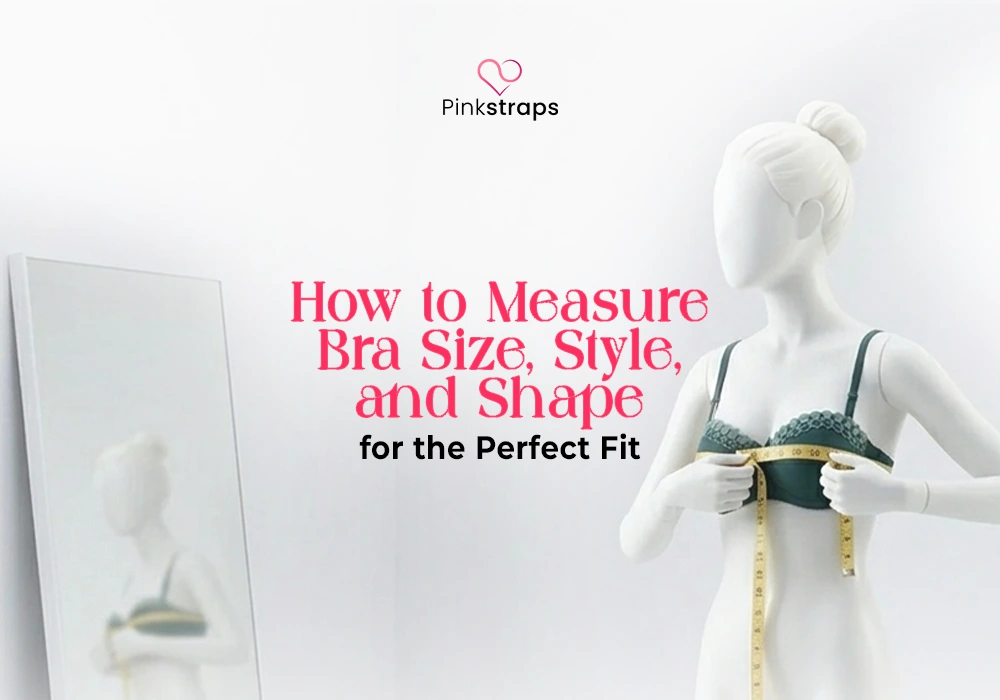
Stop guessing. Most women have been wearing the wrong size for years, and it’s not their fault. If you’ve ever wondered how to measure bra size correctly, here’s an easy and precise way to do it at home.
There’s nothing quite as frustrating as a bra that just doesn’t work. The straps slip down every five minutes. The band digs into your ribcage by noon. The cups gap or overflow, and no matter how many you try on, something always feels slightly off.
Here’s the truth: 80% of women wear the wrong bra size. Not because they haven’t tried, but because they’ve never been shown the right way to measure Bra sizing seems simple on the surface, but a few tricks can make all the difference.
This guide walks you through exactly how to measure your bra size at home, read a bra size chart, find your ideal cup size, and get a fit that feels like it was made for you.
What You Need Before You Start?
Expert tip: Always measure in the morning before any physical activity. Your body can change slightly throughout the day due to water retention, exercise, and temperature. Morning measurements tend to be the most consistent.
How to Measure Your Bra Size: Step-by-Step
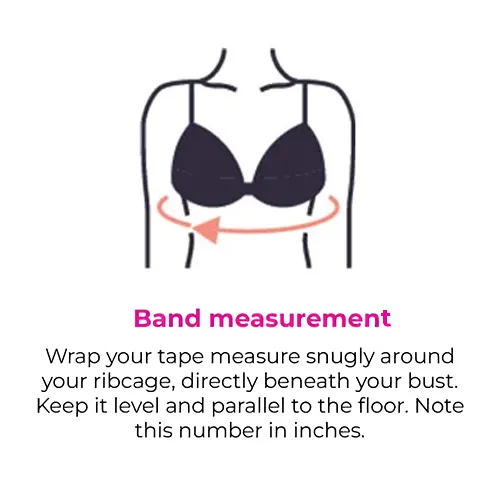
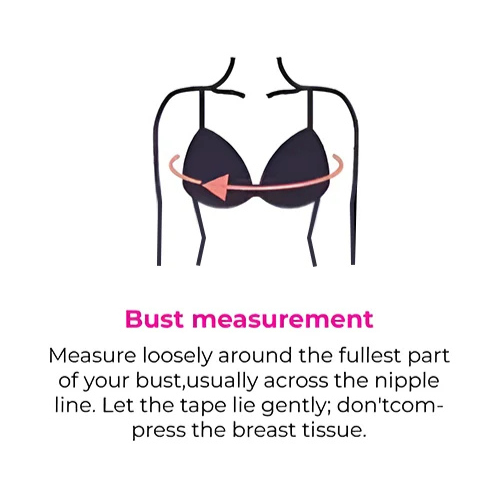
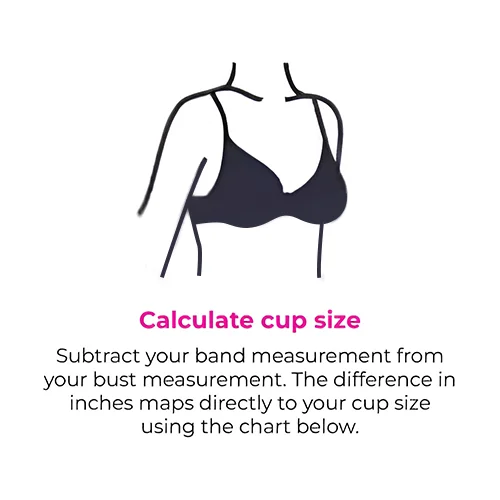
Rounding your band size
33″
Ribcage (odd)
Round up → Band size is 34
36″
Ribcage (even)
No rounding needed → Band size is 36
40″
Bust measurement
36 band + 4″ differences → Cup size is D
Calculate Your Cup Size
Difference (inches) | Cup Size |
1 | A |
2 | B |
3 | C |
4 | D |
5 | DD/E |
So, in our example:
- Bust = 36
- Band = 32
- Difference = 4 → D cup
👉 These answers: how do you know what bra cup size you are, and how to get the right cup size for a bra
Bra Size Chart
Once you have your two measurements, use this chart to find your cup size and complete bra size. Remember, this is a starting point. Different brands and styles may fit slightly differently.
Cup size chart (by difference in inches)
Difference (inches) | Cup size | Description |
0″ | AA | Very small, shallow projection |
1″ | A | Small |
2″ | B | Small to average |
3″ | C | Average |
4″ | D | Full |
5″ | DD / E | Fuller |
6″ | DDD / F | Large |
7″ | G | Extra large |
8″ | H | Full bust |
Measuring bra band size | common sizes
Ribcage (inches) | Band size | Fits around |
26–27″ | 28 | Petite/slender frame |
28–29″ | 30 | Slim frame |
30–31″ | 32 | Small to average |
32–33″ | 34 | Average |
34–35″ | 36 | Average to full |
36–37″ | 38 | Full |
38–39″ | 40 | Plus size |
40–41″ | 42 | Plus size |
42–43″ | 44 | Extended sizing |
“Most women are surprised that their band size has been too big and their cup size has been too small all along.”
Understanding Sister Bra Sizes
How sister sizes work
Going up one band size while dropping a cup size (or down a band while going up a cup) keeps the same cup volume. These are sister sizes.
34B↔36C (your size) ↔38D
If 36C fits in the cup but the band is too tight, try 38B. If it’s too loose in the band, try 34D. Same cup volume, different fit.
How to Ensure Your Bra Fits Properly
How to Ensure Your Bra Fits Properly
Knowing your size is step one. Checking the fit once it’s on is just as important. Here’s what to look for in three key areas:
Check the band
The band should sit level across your back, not riding up. On a brand-new bra, the band should feel snug on the loosest hook. As the elastic stretches over time, you tighten it. If you’re on the tightest hook from day one, go down a band size.
Check the cups
The cups should contain your breast tissue fully, with no spillage over the top or the sides, and no gaping fabric. If you see a “double bubble” at the top, the cup is too small. If the cup is wrinkling, it may be too large.
Check the straps
Straps should stay in place without digging in. If they fall off your shoulders, the issue is almost always a band that’s too large, not strap length. Tighten the band first.
- Band sits parallel to the floor and doesn’t ride up
- You can slide two fingers under the band, but no more
- Cups lie flat against the skin with no gaps or bulging
- The center gore (between cups) lies flush against your sternum
- Straps lie flat without digging into your shoulders
- Underwire (if present) follows the breast root, not resting on tissue
Different Types of Bras | Which One Suits You?
🔵
T-shirt bra
Seamless cups, smooth finish. Perfect under-fitted tops. The everyday essential.
🌙
Wireless bras
No underwire. Maximum comfort for all-day wear or lower-impact activities.
➖
Minimizer bra
Redistributes breast tissue to create a smaller, smoother profile, ideal for larger cup sizes.
🏃
Sports bra
Built for movement. Encapsulation or compression styles, depending on activity level.
✨
Bralette
Lightly structured, no underwire. Great for smaller busts and relaxed settings.
🔼
Push-up bra
Padding at the base and sides lifts and adds projection. Ideal for enhancing cleavage.
👗
Soutien gorge (French for bra): In France and many parts of Europe, bra sizing uses a slightly different system, cup sizes often start at “A” (equivalent to a larger AA), and band sizes run in centimeters. If you’re shopping European brands, always cross-reference their specific size chart before ordering.
When Your Size Changes | Remeasure Regularly
Your bra size isn’t a fixed number for life. It changes with weight fluctuations, hormonal cycles, pregnancy, breastfeeding, and even age. Many experts recommend remeasuring every six to twelve months, or any time something feels off.
If you’ve recently lost or gained weight, finished breastfeeding, or are shopping after a long break, measure fresh. Don’t assume your old size still applies.
Faqs
How do you know what bra cup size you are?
What is the ideal cup size?
How do I get the right cup size for a bra if brands vary?